
News at the HPC²
GRI's Turnage Joins National Aquatic Policy Discussions in Washington
July 1, 2026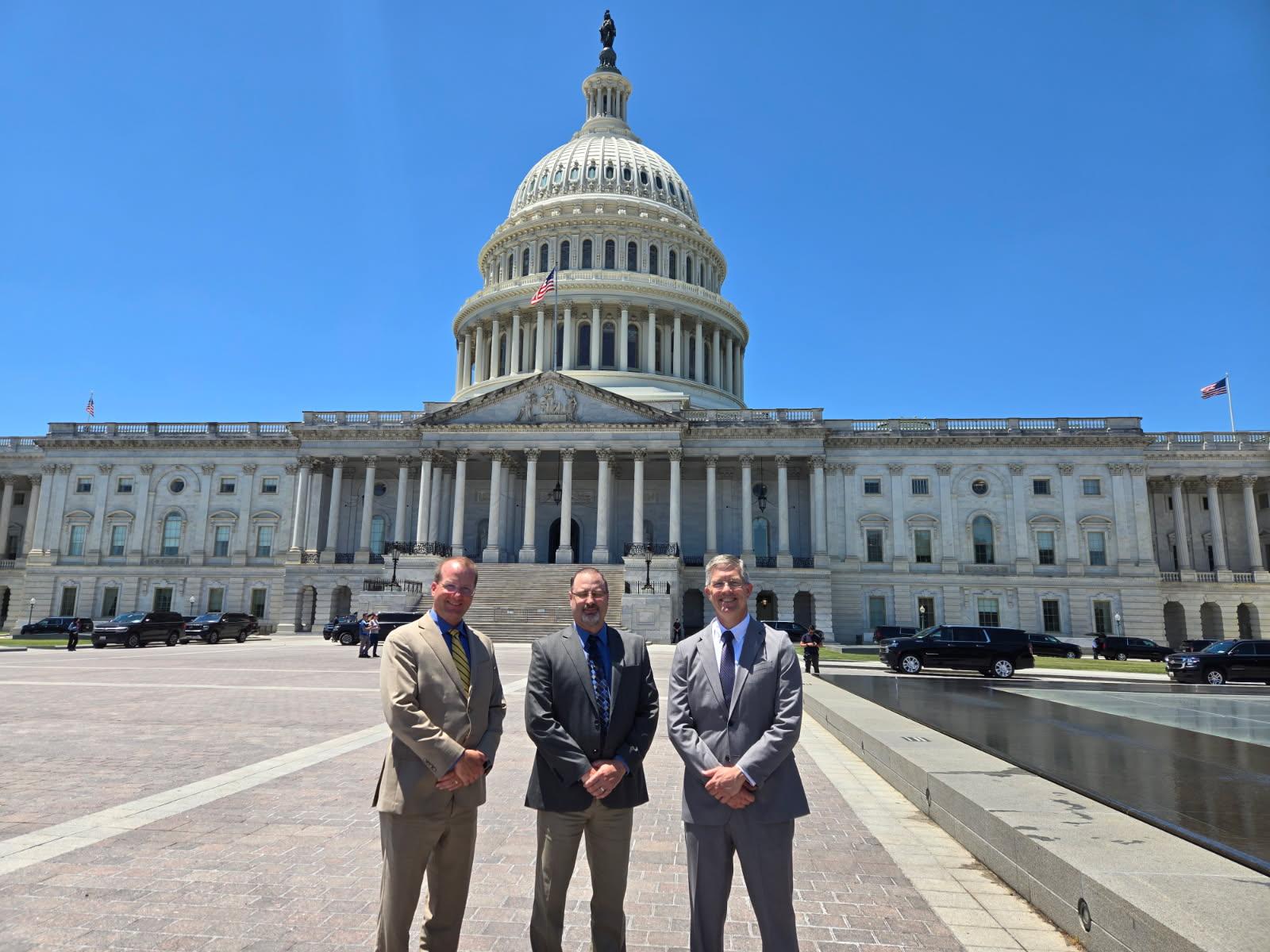
Representing academia alongside industry and management professionals, the group from the Aquatic Plant Management Society met with leaders from the U.S. Army Corps of Engineers, U.S. Fish and Wildlife Service, and members of Congressional delegations to discuss research priorities, invasive species response strategies, and regulatory needs.
Turnage, an Associate Research and Extension Professor at GRI, contributed expertise shaped by more than 15 years of field experience across Gulf Coast and inland waterways, along with research in invasive plant ecology and emerging tools like autonomous technologies for natural resource management. His perspective, along with others in the group, helped connect on-the-ground challenges with policy and funding conversations.
In meetings with the Corps of Engineers at the Pentagon, discussions focused on the Aquatic Plant Control (APC) Research Program—the nation's only federally authorized research and development program dedicated to aquatic plant management. The delegation from the Aquatic Plant Management Society emphasized the importance of sustained funding and research-based solutions as invasive species continue to impact water resources, infrastructure, and ecosystems.
The delegation also met with U.S. Fish and Wildlife Service leadership to discuss rapid response efforts for new invasive species, highlighting the importance of early detection and coordination to prevent costly, widespread infestations of aquatic weeds.
Through these meetings, the delegation worked to ensure that research, collaboration, and practical experience remain central to national decision-making on aquatic resource management.
"Invasive aquatic plants can spread quickly and affect everything from ecosystems to infrastructure," said Turnage. "By bringing field experience and research, including new advanced monitoring tools, into these conversations, we can help ensure leaders make informed decisions and have effective response plans."
For more on GRI's research projects, include those focused on advanced monitoring technologies and invasive aquatic species, visit https://www.gri.msstate.edu/research/.
For more on the Aquatic Plant Management Society, visit https://apms.org/.


